Use it up
What to Do With Leftover Egg Yolks: Small-Batch Lemon Curd
Use four extra yolks to make smooth small-batch leftover egg yolks lemon curd in 15 minutes, with lime and orange substitutions included.
- TIME
- 15 min
- SERVES
- 6
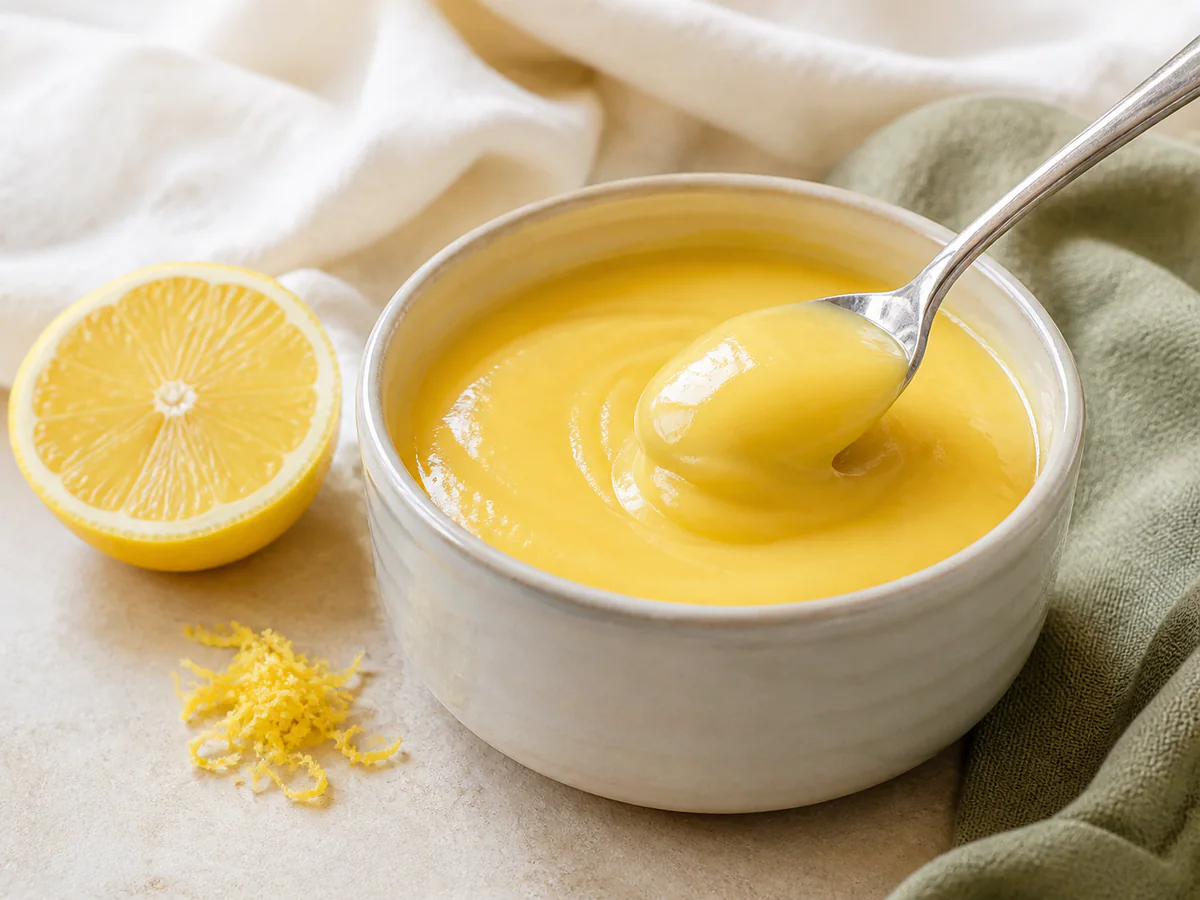
If you are wondering what to do with leftover egg yolks, small-batch lemon curd turns four spare yolks into a bright, spoonable spread. It is especially useful after meringue, an egg-white omelette, or baking that leaves the richer half of the egg behind.
This is a direct, low-heat method. Constant whisking matters more than speed: it keeps the yolks moving while the mixture thickens and prevents cooked pieces from collecting in the corners of the pan.
How to keep lemon curd smooth
Whisk the yolks and sugar together before adding acidic juice. Once the pan is on the stove, use low heat and scrape across the base and into the corners continuously. The curd is ready when it coats the back of a spoon and reaches 170°F / 77°C. It will look looser than refrigerated curd because the butter and chilling provide the final set.
If a few flecks of egg appear, take the pan off the heat rather than cooking longer. A fine sieve will remove them. Boiling can curdle the yolks and dull the fresh citrus flavor.
Citrus swaps and ways to use it
Lime juice can replace lemon juice in equal measure. Orange is sweeter and less acidic, so keep one tablespoon of lemon juice and make up the rest with orange. Grapefruit also works, although its bitterness is more noticeable.
Spoon the chilled curd over yogurt, oatmeal, pancakes, or a simple cake. Spread it on French toast made from stale bread, or use a little between cookies. If the original recipe left whites behind instead, this leftover egg white omelette uses six. For whole eggs that need attention, start with what to make with eggs.
Raw yolk safety and storage
Keep separated yolks covered and refrigerated, and use them promptly. Discard yolks that sat at room temperature for more than two hours, smell unusual, have visible mold, or have an uncertain storage history. Heat the curd to at least 170°F / 77°C, refrigerate it within two hours, and use a clean spoon each time. The FDA egg safety guidance recommends cooking egg-containing dishes thoroughly and keeping eggs refrigerated.
From fridge to table
How to make it
- 01
Whisk the egg yolks and sugar in a small heavy-bottomed saucepan until smooth. Whisk in the lemon juice, zest, and salt.
- 02
Set the pan over low heat. Cook for 6–10 minutes, whisking constantly and scraping the corners, until the curd thickens enough to coat a spoon. Do not let it boil.
- 03
Check that the curd reaches at least 170°F / 77°C. Remove the pan from the heat immediately.
- 04
Whisk in the butter a few pieces at a time until completely melted and glossy. Strain through a fine sieve if you want an especially smooth curd.
- 05
Transfer to a clean container and press parchment or reusable wrap directly onto the surface. Refrigerate promptly; the curd thickens further as it chills.